Learn the Most Effective Approach to Substance Use Treatment
Professional training in Integrative Harm Reduction Psychotherapy from the model’s developer and leading international expert. Transform your practice. Transform your clients’ outcomes.
2026 Training Schedule
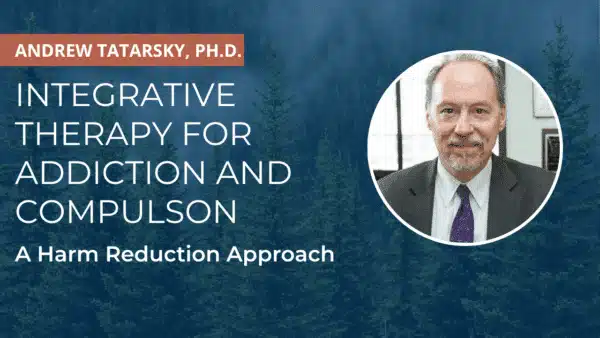

The Challenge Facing Substance Use Clinicians
Most addiction treatment models follow a familiar structure: admit powerlessness, adopt a fixed identity, commit to lifelong abstinence, and follow a prescribed path. For many clients, this works well. For others, engagement quickly breaks down.
Some clients struggle with the spiritual framing. Others resist rigid goals or feel labeled when expressing ambivalence. What is often interpreted as denial may instead reflect mismatch.
The clinical challenge is clear: not all clients relate to substances in the same way, and one pathway does not fit all. When treatment assumes uniformity or relies on shame and confrontation, it risks losing the very people who need care most.
What Happens When We Don't Have Better Tools
Consequence 1: Client Drop-Out
When clients do not connect with traditional models, many disengage from treatment entirely. The result is not resistance, but loss of care. As clinicians, we may watch clients walk away knowing the fit, not the need, was the problem.
Consequence 2: Clinician Frustration
Clinicians can feel caught between rigid training frameworks and the nuanced realities clients bring into the room. The desire to help remains strong, but the available tools may feel limited.
Consequence 3: Missed Opportunities for Change
Engagement is strongest when clients feel heard, respected, and met where they are. When treatment relies on predetermined goals or confrontation, resistance increases. Without flexible approaches, opportunities for meaningful and sustained change are often missed.
Integrative Harm Reduction Psychotherapy: A Comprehensive Clinical Approach
Learn from the clinician who developed the model.
Integrative Harm Reduction Psychotherapy is not simply a philosophy. It is a structured clinical approach grounded in a coherent theoretical framework, with specific therapeutic techniques and intervention strategies.
Through IHRP training, clinicians learn to work effectively with clients across the full spectrum of goals, from safer use and moderation to abstinence. The training clarifies how this model differs from motivational interviewing while integrating relational depth and practical behavior change strategies.
Most importantly, it equips clinicians to engage and support clients who have not responded to traditional approaches.
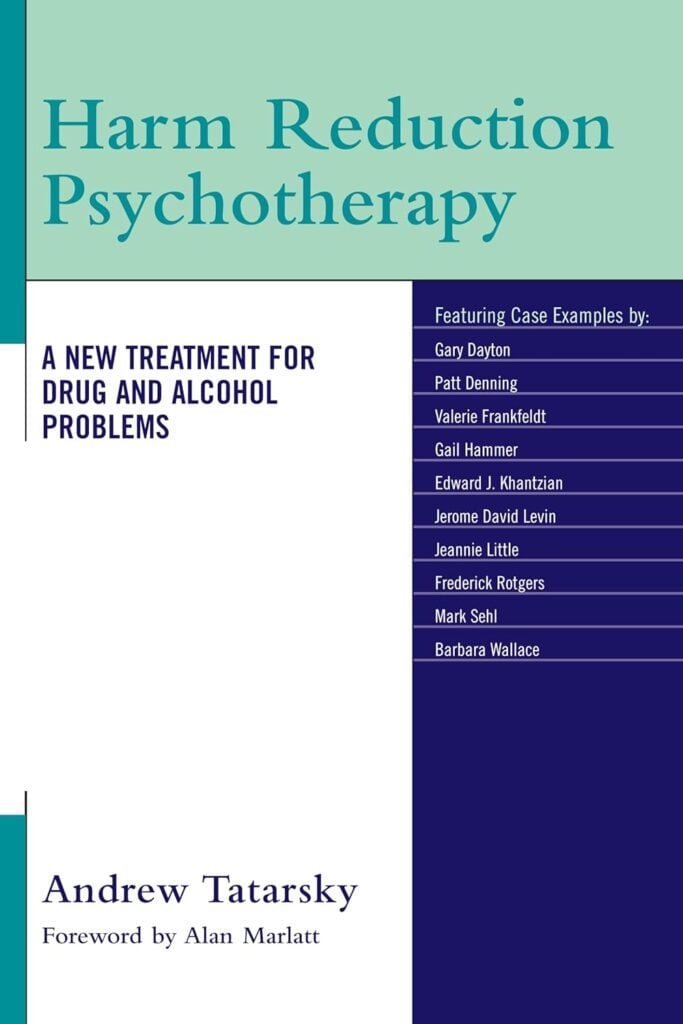
Training and Supervision Available
IHRP Essentials Training
Format: 3-day intensive certificate program
What You’ll Learn: Complete introduction to IHRP theory and practice, how to assess clients and develop harm reduction treatment plans, specific therapeutic techniques for working across the spectrum of goals, integration of multiple modalities, case consultation and application to your practice.
Who It’s For: Therapists, counselors, social workers, psychologists, addiction counselors, any clinician working with substance use issues, certified peer specialists.
CEU Credits: Available
Next Training: Check upcoming events or join waitlist
Professional Consultation Groups
Format: Monthly virtual meetings for ongoing learning and case consultation
What You Get: Expert guidance on complex cases, peer support from other harm reduction practitioners, continued skill development, community of like-minded clinicians.
Who It’s For: Clinicians with some knowledge of harm reduction, not just those already trained in IHRP or with harm reduction experience seeking ongoing supervision and support.
Workshops and Keynote Presentations
Format: Customized presentations for conferences, agencies, organizations
Topics Available: Introduction to harm reduction and IHRP, working with ambivalent or treatment-resistant clients, alternatives to abstinence-only models, trauma-informed harm reduction, centering dignity, creating safety and alliance, managing countertransference, integrating IHRP into existing therapy practices, develop expertise and confidence addressing substance use issues.
Who It’s For: Conferences, treatment centers, agencies, professional organizations, training programs.
LGBTQ+ Individuals Needing Affirming Care
Format: One-on-one supervision and consultation
What You Get: Personalized guidance for integrating IHRP into your practice, case-specific supervision, support for licensure candidates, specialized mentorship in harm reduction approaches.
Who It’s For: Individual clinicians seeking intensive supervision, pre-licensed clinicians, practitioners developing harm reduction programs.
What Trainees Say?
Thank you for this workshop. I continue to feel frustration with the irony of so many practitioners insisting that SA be
addressed separately and prior to addressing MH needs, thereby ignoring the needs of patients with co-occurring
disorders.
Symposium Attendee
Psychotherapy Networker Symposium 2026
Really loved this training and would like more trainings that take a nuanced, harm reduction approach and encourage
therapists to stay with clients and not always refer out or to higher levels of care
Symposium Attendee
Psychotherapy Networker Symposium 2026
Great presentation that validated my approach to substance use with client’s that use it as a coping skill rathan than
an addiciton. I appreciate the knowledge and learning experience.
Symposium Attendee
Psychotherapy Networker Symposium 2026
Thank you for an excellent presentation and for your approachability. You have changed the way I view addictions
and treatment.
Symposium Attendee
Psychotherapy Networker Symposium 2026
Andrew has a rare ability to bring rigor and deep compassion into the same room. His approach to harm reduction helped me fundamentally shift how I work with clients who use substances. I now feel more effective, more grounded, and more human in my clinical work.
Maria
This was one of the most clinically useful trainings I’ve attended in years. Andrew doesn’t just talk about harm reduction as a philosophy, he shows you how to practice it moment by moment, especially when clients are ambivalent, struggling, or not ready for abstinence.
James
Andrew’s teaching affirmed so much of what I intuitively felt was missing in traditional addiction models. His work helped me slow down, listen differently, and build stronger therapeutic alliances with clients who had previously disengaged from care.
Lina
Andrew brings extraordinary clarity to complex clinical situations. His integration of trauma, self regulation, and harm reduction gave me practical tools I could use immediately. This training changed how I understand both addiction and healing.
Robert
What stood out most was Andrew’s respect for clients’ dignity and autonomy. He models a way of working that is ethical, compassionate, and deeply effective. I left with renewed confidence and a stronger sense of purpose in my work.
Grace
Is IHRP Training Right for You?
People do not need to have all the answers. Curiosity and openness to expanding their clinical approach is enough.
Clinical Backgrounds
Licensed therapists, psychologists, addiction counselors, social workers, psychiatric professionals, and certified peer specialists.
Practice Settings
Private practice, agencies and treatment centers, hospitals and medical systems, college counseling centers, and community mental health settings.
Experience Levels
Experienced clinicians seeking to deepen their work, newer clinicians wanting comprehensive harm reduction training, and supervisors or program directors developing harm reduction programs.
Motivations
Clinicians who feel constrained by abstinence-only models, professionals seeking evidence-based alternatives, therapists working with ambivalent or resistant clients, and practitioners committed to autonomy, dignity, and collaborative care.
Transform Your Practice with IHRP Training
People who need harm reduction therapy are waiting in your office right now. Give yourself the tools to truly help them.